Holding Space by Amy Wright Glenn: A Reflective Reading Guide
Some books give us information. Others give us language for experiences we have felt but struggled to name.
Holding Space: On Loving, Dying, and Letting Go by Amy Wright Glenn belongs to the second kind.
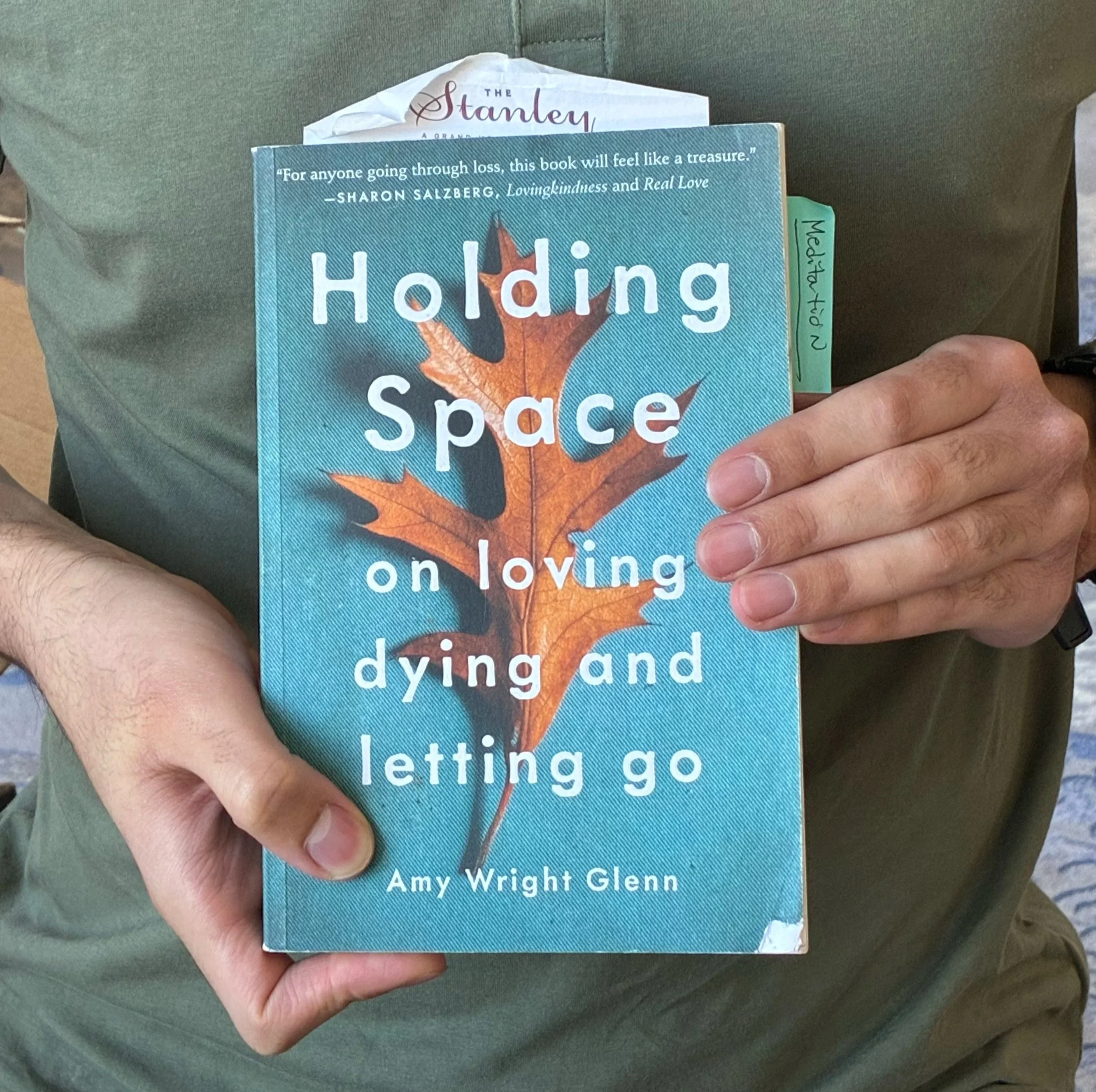
Drawing from her experiences as a hospital chaplain, doula, educator, and mindfulness practitioner, Glenn explores how we encounter grief, mortality, love, and loss—and what it can mean to remain present when another person is moving through something we cannot fix.
It is one of the books featured in the Center for the Heart Reading Room because its central question connects closely with something many caregivers, grieving people, and families encounter: How do we stay present with someone when we cannot change what is happening?
This guide is not a replacement for reading the book, and we will keep the spoilers to a minimum.
Instead, consider it a companion: a few places to pause, questions to carry with you, and permission to read in whatever way feels manageable.
What Is Holding Space about?
Holding Space explores the emotional, spiritual, and philosophical dimensions of being present with suffering, grief, dying, and other profound transitions.
Glenn brings together personal stories, experiences from her work as a hospital chaplain and doula, philosophical inquiry, and research about death and dying. Rather than treating mortality as an abstract subject, she asks readers to consider what it means to encounter it personally—as something that touches our relationships, our fears, our bodies, and our understanding of love.
At the center of the book is the practice that gives it its name: holding space.
It is an idea that sounds simple but becomes much more complicated when someone we love is suffering.
What happens when we cannot make it better?
What can we offer when advice is not what someone needs?
How do we stay instead of turning away?
These are some of the questions that make Holding Space especially relevant for people navigating caregiving, anticipatory grief, death, and bereavement.
The Idea You Keep Coming Back To: What Does It Mean to Hold Space?
When someone we love is hurting, many of us instinctively want to help.
We search for the right words. We offer solutions. We reassure. We try to make an unbearable situation a little more bearable.
Sometimes those efforts are useful. Sometimes what another person needs is different.
One of the central invitations in Holding Space is to consider the value of compassionate presence: listening, witnessing, and allowing another person's experience to exist without immediately trying to change it.
That can be difficult around dying and grief.
There may be no sentence that makes the situation okay. There may be no action that removes someone's fear. Grief may return in different forms even after years have passed.
For someone supporting a dying loved one, that might mean sitting quietly at the bedside instead of searching for conversation. For a caregiver, it might mean listening when a family member admits they are afraid. For someone supporting a grieving friend, it might mean allowing the person's sadness to be present without rushing toward reassurance.
Presence is not passivity.
Listening, witnessing, staying, and respecting another person's experience can be meaningful ways of caring.
How to Read This Book When Death or Grief Is Personal
There is a difference between reading about death when it feels theoretical and reading about it when someone you love is dying—or has died.
A passage that feels thoughtful to one reader may feel overwhelming to another.
You do not need to approach Holding Space like an assignment.
Try reading a few pages at a time. Keep a notebook nearby if writing helps you process what you are reading. Underline something that stays with you. Close the book when you have had enough.
You might also notice your resistance.
Is there an idea you disagree with? A story you are not ready for? A question that makes you uncomfortable? Something you want to revisit later?
You do not need to resolve those reactions.
If you are actively caregiving or grieving, your capacity may also change from day to day. There may be weeks when reflective reading feels helpful and others when reading anything feels like too much.
Both are okay.
A book about grief does not need to become another thing you have to accomplish.
Sections and Themes Worth Spending More Time with
Several themes appear throughout Holding Space That May Spark Your Curiosity
Presence instead of Fixing
Notice the moments that challenge the assumption that helping always requires doing something.
Ask yourself what changes when the goal moves from solving another person's pain to accompanying them through it.
Our Relationship with Mortality
Glenn moves beyond death as an idea and considers what it means to acknowledge mortality more fully.
You might notice what comes up for you here: curiosity, fear, resistance, recognition, or even relief at having the subject spoken about openly.
There is no correct response.
Love and Loss
The book repeatedly brings love and loss into the same conversation.
For readers who are grieving, this may be one of the places to move slowly. Rather than looking for a lesson, notice what the stories bring to mind about your own relationships and experiences.
Witnessing difficult experiences
Glenn's background as a hospital chaplain brings readers near experiences of illness, trauma, grief, and death.
These sections may be meaningful, and they may also be difficult.
Give yourself permission to pause or skip ahead if a story is more than you want to hold at that moment.
Holding Space for Yourself
As you consider how to be present for another person, turn the question inward occasionally.
What would it mean to offer yourself some of the same patience?
People supporting someone who is dying can carry exhaustion, anticipatory grief, uncertainty, fear, and responsibilities that are largely invisible to others. Grieving people may also feel pressure to explain, manage, or move through their grief in ways that make other people more comfortable.
Consider whether holding space can include allowing your own experience to be complicated, too.
Questions to Take With You While You Read

You can journal about these questions, discuss them with someone else, bring them to a book club, or simply let them sit with you.
1. When someone I love is hurting, do I feel pressure to make things better?
Where do you think that pressure comes from?
2. What does being present look like when there is nothing I can change?
3. How comfortable am I with silence?
4. What have my experiences with loss taught me about supporting other people?
5. Are there emotions that are harder for me to witness than others?
6. What would help me feel accompanied during a difficult time?
The answer may offer clues about the kind of support you value—and the support you may need to ask for.
7. Where do I need someone to hold space for me?
People who spend significant time supporting others need places where they do not have to be the strong or capable one.
Who Might Find Holding Space Helpful?
There is no single audience for a book about mortality, because death and grief eventually touch all of us.
Still, Holding Space may particularly resonate with:
Someone supporting a loved one who is dying
Family caregivers
People experiencing anticipatory grief
People grieving a death or other significant loss
End-of-life doulas and others providing non-clinical support
Friends who want to become more comfortable supporting someone who is grieving
People interested in exploring their own relationship with mortality
Readers interested in compassionate presence, mindfulness, and the emotional dimensions of caregiving
It is also worth saying clearly: this may not be the book you need right now.
If you are exhausted from caregiving, newly bereaved, or simply feeling emotionally full, reflective writing about death and grief may feel like too much.
You Don't Have to Finish a Book for It to Give You Something
There is a tendency to measure reading by completion.
How many pages did you finish? How many books did you read? Did you get to the last chapter?
Grief and end-of-life reading may ask for a different measure.
Maybe you read ten pages and one question stays with you.
Maybe a passage helps you understand why sitting quietly with your dying parent feels more meaningful than searching for the perfect thing to say.
Maybe something helps you recognize what you need from the people supporting you.
Or maybe the book simply gives you language for an experience you already knew.
Becoming more comfortable with death does not mean becoming unaffected by it. Learning about grief does not make grief predictable. And practicing presence does not mean knowing exactly what to do when someone you love is suffering.
Sometimes it means becoming a little more willing to remain beside what is difficult.
That is part of what makes Holding Space worth spending time with.
Continue Reading with the Center for the Heart Reading Room
Holding Space: On Loving, Dying, and Letting Go is featured in the Center for the Heart Reading Room, a collection of books and other resources for people exploring grief, caregiving, end of life, and the experiences that surround them.
FAQs
What is Holding Space by Amy Wright Glenn about?
Holding Space: On Loving, Dying, and Letting Go explores grief, mortality, love, loss, and compassionate presence. Glenn draws from memoir, philosophical inquiry, research, and her experiences as a hospital chaplain and doula.
What does “holding space” mean?
Holding space generally describes being present with another person's experience without immediately trying to change, fix, or minimize it. It can involve listening, witnessing, allowing silence, and respecting what the other person needs.
Is Holding Space a grief book?
Grief is an important part of the book, but its scope is broader. Glenn considers mortality, dying, loss, love, mindfulness, and what it means to accompany people through significant life transitions.
Is Holding Space helpful for caregivers?
Caregivers may find the book's exploration of presence, listening, mortality, and accompanying others relevant. Because experiences vary, readers should feel free to pause or step away if reading about death or grief feels overwhelming at a particular time.
Do I need to read Holding Space all in order?
Readers can choose the pace and approach that works for them. When a book deals with personally meaningful subjects such as death and grief, pausing, rereading, or taking time away can be part of the reading experience.
Sources
Glenn, A. W. (2017). Holding Space: On Loving, Dying, and Letting Go. Parallax Press.